
The founder’s Tinder ban,
lifted in 31 days.
No reason was ever given, and there was no way to appeal, because Tinder’s own appeal runs on the login that was banned. What worked was data protection law, a handful of emails and a one-month legal deadline. Hinge is still banned. That fight runs on this page next.
It costs nothing, and it tells you plainly when paying anyone is the wrong move.
Tinder’s Data Protection Office lifted the ban on the last day of its legal deadline, and a new account opened the same day, at Tinder’s written invitation. Hinge copied its ban from Tinder and has not lifted it yet. On 28 September Hinge was told its own condition has been met, and Tinder was asked to correct the ban everywhere it shared it. Last updated 30 September 2026.
What happened, in order
A data access request goes to Tinder’s support form and to Match Group’s legal desk. It asks for everything they hold, the record of the ban, and a human review if a machine made the decision.
The legal desk twice points to a self-service tool that needs the banned login, then says it is “not certain what service you are referencing”.
Hinge’s Data Protection Office explains the Hinge ban: it “originated on Tinder”, and the Hinge account “cannot be reinstated unless and until the original Tinder ban is overturned”. The same day, Tinder support escalates the ticket to “a specialist”.
A formal notice to Tinder’s data protection officer and its UK representative: the deadline, the regulator, and an offer to prove identity any way that does not need the banned login.
Twenty-two days of silence from the specialist. A short chase names the date the legal deadline runs out.
Two holding replies, the first saying: “We will investigate this issue and revert as soon as possible.”
Tinder’s Data Protection Office answers, and lifts the ban. A new account opens the same day and works.
Two emails. To Hinge: the condition it set on 26 August has been met, so reinstate the account. To Tinder: the ban it has lifted is still being applied on Hinge, so correct it everywhere it was shared and say which apps were told. Tinder’s legal deadline for that is 28 October.
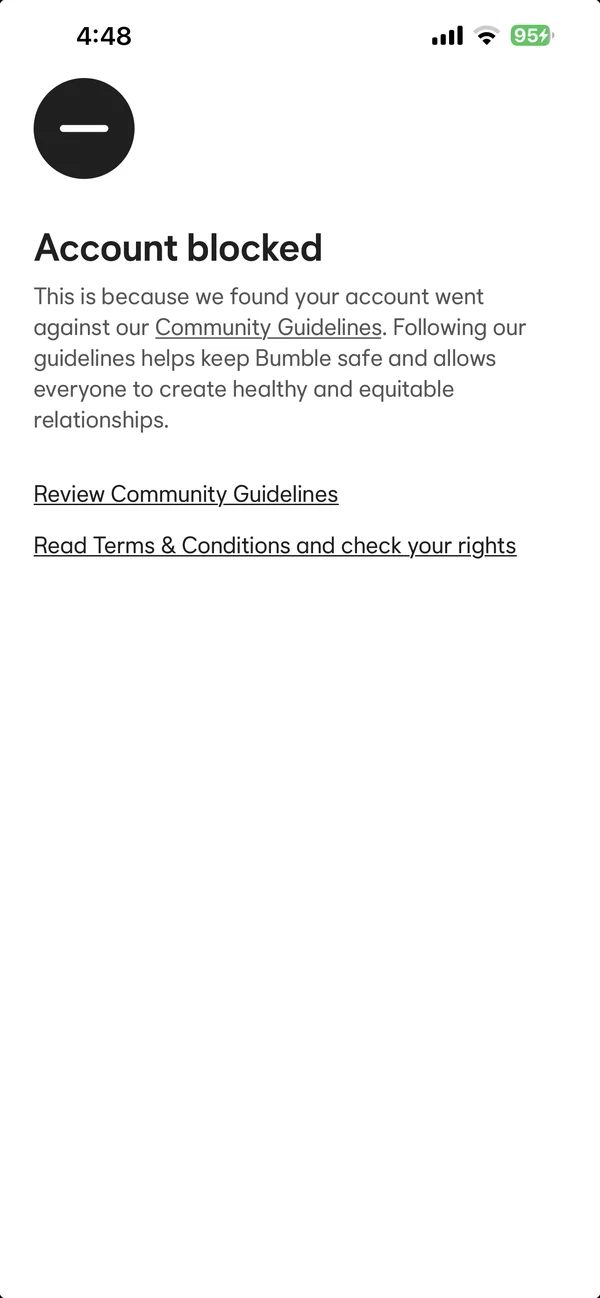
The founder’s Bumble account shows “Account blocked”.
“…we are pleased to confirm that Tinder has reviewed your appeal and that your credentials have been unbanned. If you would like to create a new account, please do so…”
Tinder’s Data Protection Office, 24 September 2026
The email, and the app the same afternoon

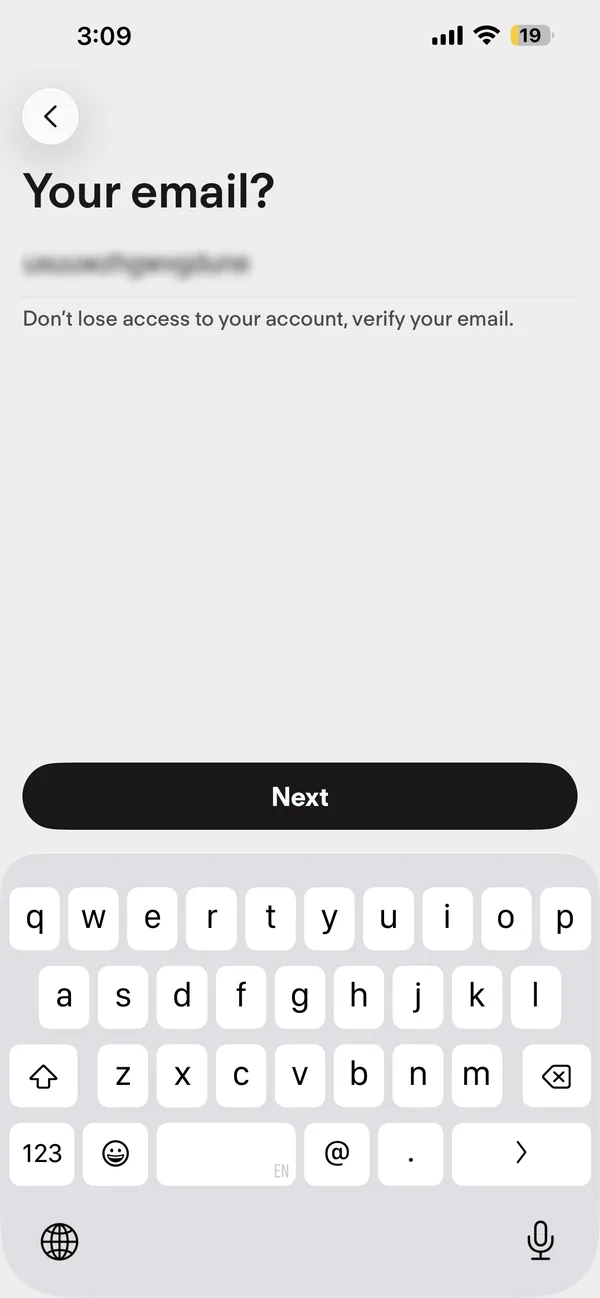
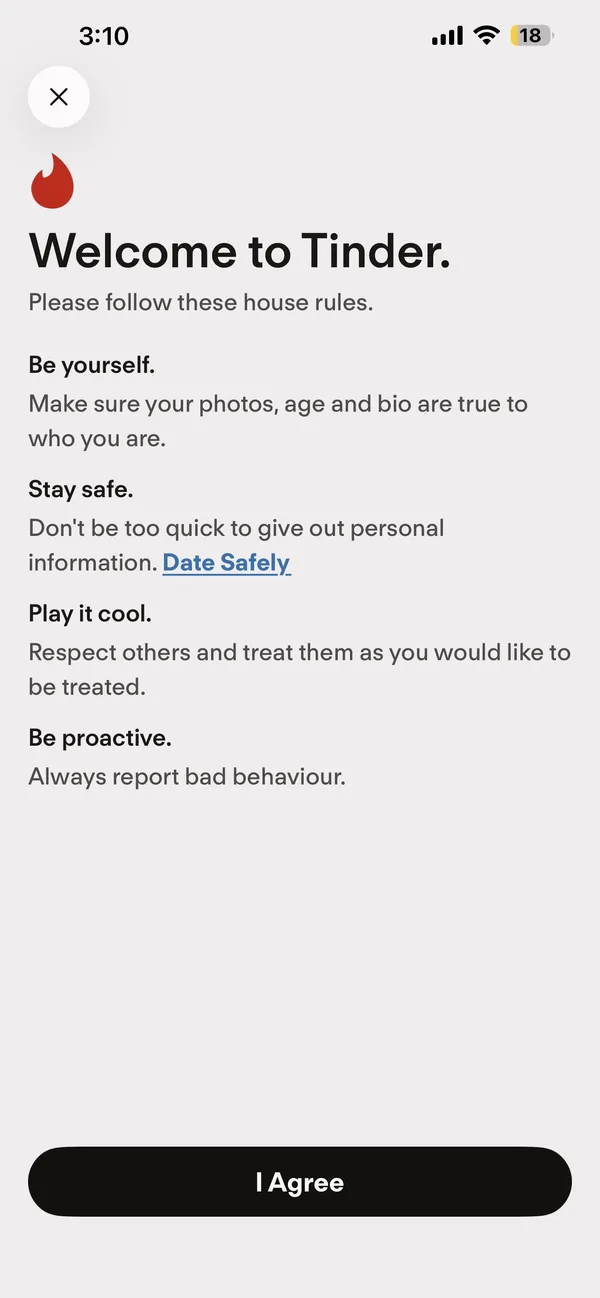
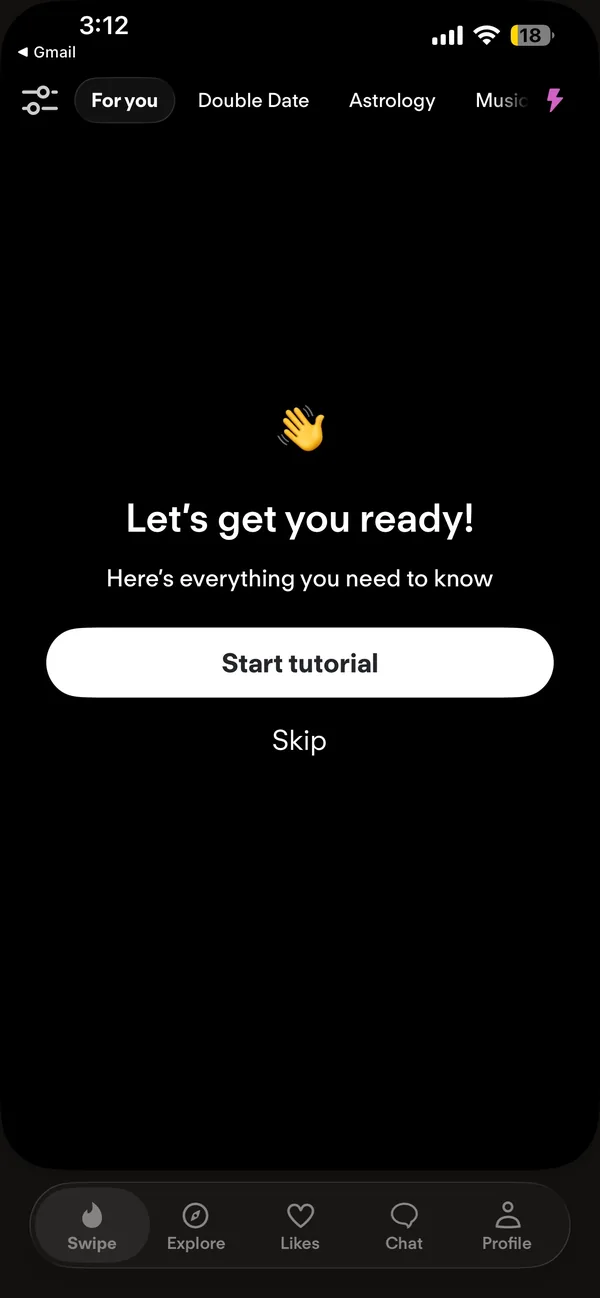

Screenshots from the founder’s phone on 24 September 2026, four minutes apart. The name and email address are blurred.
What this proves, and what it does not
It proves the route. When an app’s own appeal is out of reach, a data protection request comes with a legal deadline the company has to meet. Here it answered on the last day of that deadline, and the answer lifted the ban.
It does not prove a success rate. One case is one case. Tinder never said why it lifted the ban, and it still has not said why it banned the account in the first place. It is listed beside the other documented cases in do dating app ban appeals work.
The lift did not travel. Hinge copied the ban from Tinder automatically. It has not copied the lift.
It is not a workaround. Nothing was reset and nothing was evaded. Tinder lifted the block and invited the new account in writing. We do not sell resets and never will.
What Tinder still has not said
The reason for the original ban. What it told Hinge. How long it keeps the ban record. And the copy of the data it holds, which arrived as a five-line summary. None of that stopped the ban being lifted, and all of it can still be asked for.
Next: Hinge
In the UK and the EU, Tinder and Hinge have the same data controller: MTCH Technology Services Limited, in Dublin. One company has decided the ban should not stand on Tinder, and it is still applying the same ban on Hinge. On 28 September 2026 a request went in asking it to correct the ban everywhere it was shared. The same day, Hinge was told the condition it set has been met. The answers go up here when they arrive.
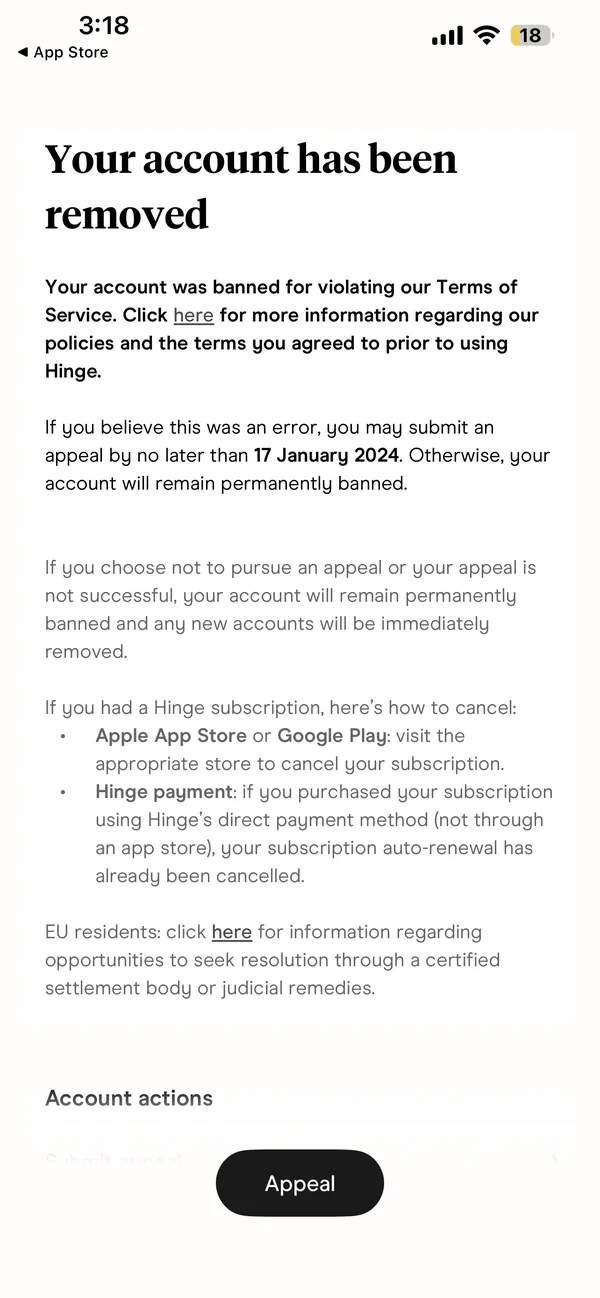
Bumble, seen on 30 September
On 30 September 2026 the founder’s Bumble account showed this screen. The only reason it gives is that the account “went against our Community Guidelines”. It does not say which guideline.
Bumble is a separate company from Match Group, which owns Tinder and Hinge. Whether this block has anything to do with the other two is not known.
What went into the service
The lessons from this case, including which support form actually reaches the data team and when to chase, now go into the filings we send. The route itself is free to read in the guide.
Check your case first. It is free, and it says plainly when paying anyone is the wrong move.